Open Mic Night at the Compiler: Why Programming Languages Act Like Local Music Scenes
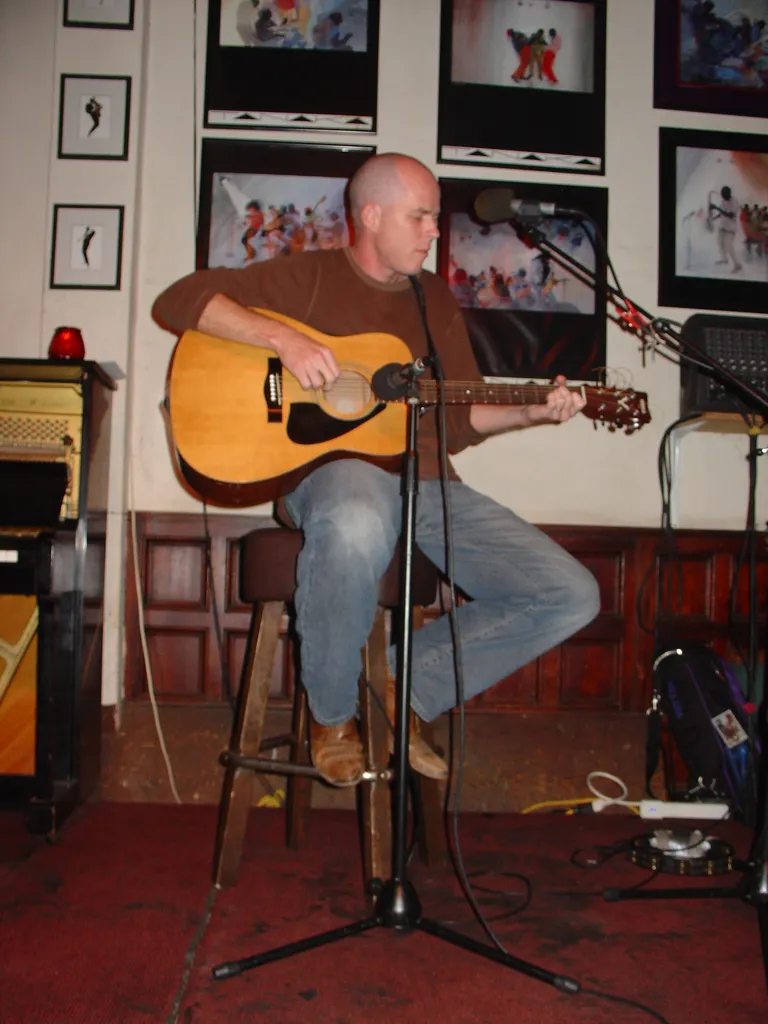
Photo: Tracy Ruggles from San Rafael, CA, USA, CC BY-SA 2.0, via Wikimedia Commons
A few months back I ended up at an open mic night in a dive bar in Oakland. Between a folk singer and a guy doing spoken word about his cat, it hit me: I'd seen this exact crowd before. Not these people, specifically — this structure. The eager newcomers, the grizzled regulars, the one band everyone agrees is 'about to make it.' It was a programming language community, with beer.
I've been chewing on that comparison ever since, and I think it holds up better than it has any right to. Language ecosystems don't just resemble music scenes metaphorically. They behave like them, follow the same lifecycle, and — here's the fun part — fail for the same reasons.
Every Scene Has a House Style
Walk into any jazz jam session and you'll learn the rules fast: know the standards, don't solo too long, don't clap on one and three. Nobody posts these rules. You absorb them or you get the looks.
Programming communities work identically. Show up in a Rust forum asking why the compiler won't let you do the thing, and you'll get a patient lecture about ownership that's equal parts helpful and condescending. Ask a Lisp old-timer about the best IDE and brace yourself for a five-paragraph history of Emacs. Python has its own liturgy — PEP 8, the Zen of Python, the ritual import of this. These aren't documentation. They're scene norms, transmitted socially.
What's interesting is how much of a language's actual success is determined by this unwritten layer rather than the technical one. The compiler is the instrument. The scene is the band.
The Coffeehouse Circuit Problem
Every mid-sized city has a band that's been playing the same coffeehouse for fifteen years. They're genuinely good. The regulars love them. They will never, ever tour outside the tri-county area.
Programming has these too, and they're easier to name than you'd think. Haskell has been headlining the coffeehouse circuit since the nineties. Technically brilliant? Absolutely. Devoted local following? Fiercely. Mainstream breakthrough? It keeps telling everyone the big tour is coming right after it finishes rewriting its type system.
The pattern repeats across the scene. Erlang built telephone networks that handled half the planet's calls and still plays mostly to the hometown crowd. Forth, APL, Factor — all virtuosos, all permanent fixtures at the same venue. The music is great. The door policy is the problem.
Gatekeepers, Venues, and A&R Guys
Here's where it gets structural. Music scenes break out when three things align: a venue that books new acts, gatekeepers willing to vouch, and — crucially — someone with industry connections in the room.
Map that onto languages. The 'venue' is where code actually ships: enterprises, startups, universities. The 'gatekeepers' are conference organizers, popular bloggers, and the people who decide what lands on a hiring bar. And the 'A&R guy'? That's whoever has corporate muscle behind them.
Look at the languages that broke through in the last fifteen years and you'll find a label deal in every story. Go had Google. Kotlin had JetBrains, then Google's blessing for Android. TypeScript had Microsoft — the biggest label in the business, actively signing acts. Compare that to genuinely excellent languages with no label: Crystal, Nim, Odin. Great records, no distribution.
I went back through a decade of Hacker News threads and Stack Overflow survey data for a project I'll write up separately, and the correlation is blunt: technical merit predicts staying power, but institutional backing predicts arrival. The scene analogy isn't cute here. It's predictive.
One-Hit-Wonder Frameworks
Every scene produces them: the band with one song on the local radio station. Web dev is a one-hit-wonder factory. Remember the framework that was going to replace React? There have been about nine of them, each with a legendary launch and a quiet second act. The music parallel is exact — the debut single gets played everywhere, the album doesn't chart, the band breaks up on good terms in a Discord somewhere.
The difference is that in software, one-hit wonders don't disappear. They leave behind a back catalog of half-maintained packages, still streaming in everyone's node_modules like an old single stuck on a playlist.
So What Do You Do With This?
If you're picking a language the way you'd pick which scene to join — and honestly, you are — a few things follow:
Check the venues, not the reviews. Who's actually booking this language? If the answer is 'startups that haven't shipped yet,' price that in.
Read the door policy. Every community's reaction to newcomers tells you its future. Scenes that welcome transplants grow. Scenes that quiz you on the deep cuts at the door don't.
Watch for the label deal. A language getting corporate backing is a language about to get radio play. You can like that or resent it, but pretending it doesn't matter is how you end up playing to twelve people forever.
The guy with the cat poem closed out the night, by the way. He was not good. Everyone applauded anyway, because that's what scenes do — they sustain the people who show up. That's the part of the analogy I actually find touching. Every language community, from the Rust true believers to the COBOL maintainers keeping banks running, is a room full of people showing up for something they love, at whatever venue will have them.
Some of those rooms turn into stadiums. Most don't. But the coffeehouse bands keep the scene alive between breakthroughs, and honestly, the ecosystem would be a lot poorer — technically and culturally — without them.
Now if you'll excuse me, I have strong opinions about a framework nobody's heard of, and the open mic is calling.